Philadelphia Federation of Teachers Releases Plan to Save 17 Schools & Reverse Student Enrollment Drop
(November 11, 2026) PHILADELPHIA - The Philadelphia Federation of Teachers (PFT Local 3) on Wednesday released a plan for school buildings that would prevent closures and result in measurable improvement to students’ learning conditions before the end of the 2026-2027 school year.
Phase 1 of the PFT Facilities Action Plan saves all 17 schools targeted for closure by the School District of Philadelphia, following a Board of Education vote last spring. For a fraction of the cost estimated by the District, increased repair, replacement, and cleaning would be done in all 17 schools in time for families and students to see a difference before making enrollment decisions for the 2027-2028 school year. Physicians for Social Responsibility Pennsylvania has endorsed the PFT’s plan as better for student and staff health and safety.
The release of the PFT’s plan comes after a documented drop in District student enrollment this academic year, which the union warned would happen ahead of the April 30th vote to close 17 schools.
"During school board meetings in which PFT members, students, and families pleaded for their schools to remain open, we saw no one speak in support of the District’s plan. The District’s cynical plan for decline will create education deserts in already vulnerable communities,” PFT President Arthur G. Steinberg said. “The City of Philadelphia cannot grow and thrive if its public education system is allowed to shrink and wither. Therefore, the PFT calls on Mayor Cherelle Parker to intervene and save our schools. The Board of Education and District ignore the public, but they cannot ignore the Mayor. No school system with a plan for growth closes schools. Let’s work together on a plan that earns the trust of school-age families and educators and grows our schools!”
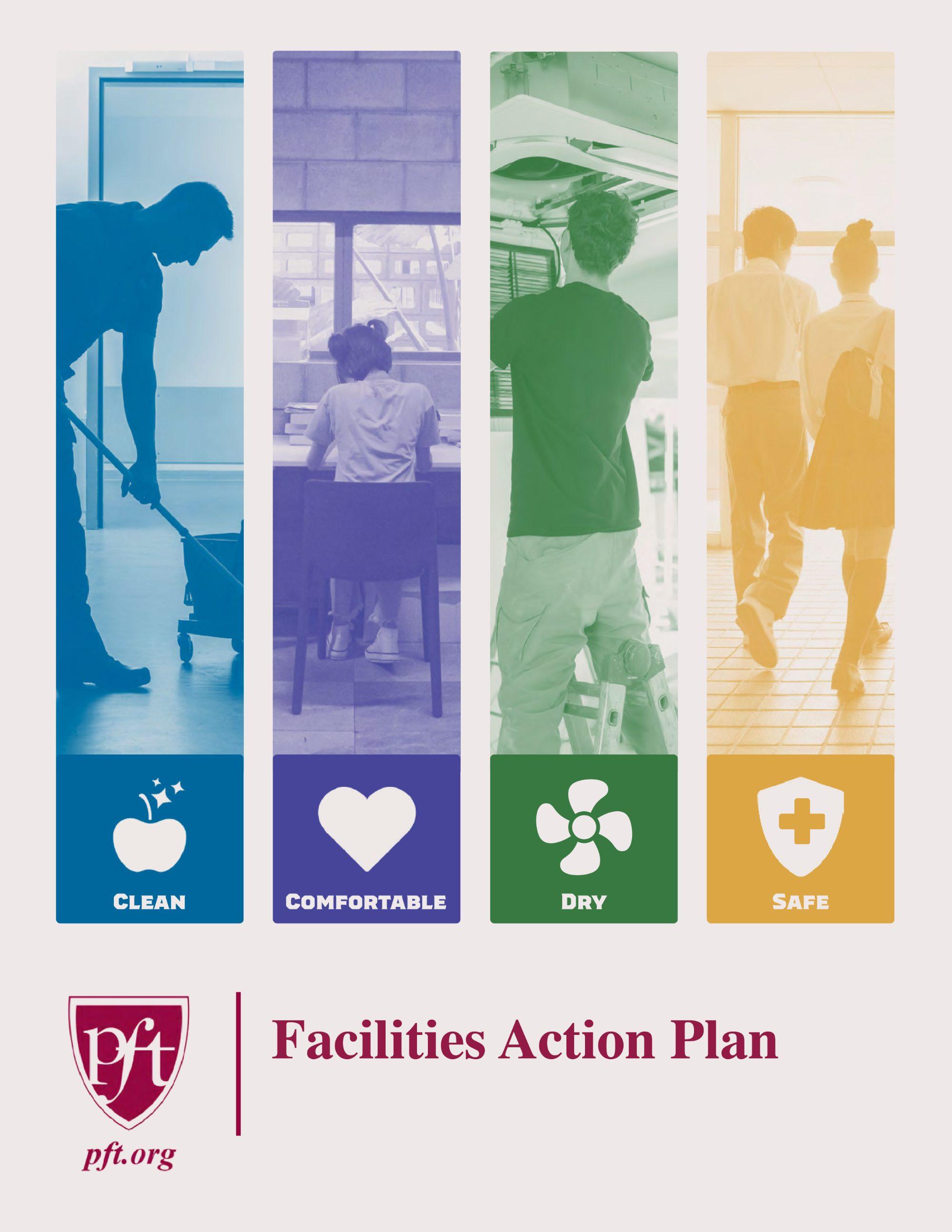
The PFT Facilities Action Plan presents a roadmap to improve learning conditions imminently for students in all 17 schools. Every school would achieve baseline acceptable conditions for students: clean, comfortable, dry, and safe. Demonstrable results would be used by the District to persuade families and students to enroll (or re-enroll) in these schools.
For a fraction of the cost the District claims is needed to address outstanding building issues, the PFT Facilities Action Plan requires additional staffing and resources for cleaning, repair, and maintenance. Rapid Repairs Teams and Rapid Cleaning Teams would be deployed to schools as needed, and would be tasked with resolving building issues within days – as opposed to the current median work order cycle of nine or more weeks.
The PFT Facilities Action Plan relies on funds already appropriated this fiscal year for operational and capital needs. The District would work with PFT members and other stakeholders to prioritize capital projects and system repairs or upgrades in future years, until all Philadelphia public schools can demonstrate clean, comfortable, dry, and safe conditions throughout the academic year.
PFT members assigned to the 17 closing schools called out the District for failing to produce a plan that elevates learning conditions for students in affected communities, and underscored the harm the District and Board’s refusal to listen has already done to students.
“The sentiment at Harding among both staff and students is that the School District should have invested in our building long ago, and now we are being punished for their lack of investment because the District points to our building score as a reason for our closure,” said Jana Pugsley, a PFT member and teacher at Harding Middle School. “Our building has been treated as an afterthought while we watch other schools, who absolutely deserve all they've got, receive upgrades and investment that we know we deserve, too. Middle schoolers love to ask WHY, and it's hard to explain to my 8th graders why our building is closing, receiving renovations, and then reopening to house another District school, when the option to upgrade Harding's building for Harding students exists.”
“As an English teacher, I teach students how to construct an argument using a claim, evidence, and reasoning. You’ve made your claim: Parkway Northwest should close. But you haven’t completed your CER. You haven’t supported that claim with sufficient evidence and reasoning,” said Faris Carter, a PFT member and teacher. “I wouldn’t accept an unsupported argument from my tenth graders; why should the people of Philadelphia accept one from the School Board?”
“Everyone knows that the only reason high-achieving schools like AMY are under-enrolled is because the District failed to keep the building full. But where SDP has failed, we have succeeded, consistently maintaining an exemplary school by every metric, from PSSA scores, to attendance, to safety and student well-being,” said Gavin Torrisi, a teacher at AMY Northwest. “It’s the District’s job to recognize that AMY is an exceptional and unique true middle school in the Northwest, and make damn sure our building is full. Why should our children have to pay the price for the SDP’s poor planning?”
The District has yet to rectify changes to its admissions process that kept students out of their schools of choice, as has been reported by the Philadelphia Inquirer (opens in a new tab)and other news outlets.
“Mayor Parker, you have publicly supported the facilities plan and appointed the Board that voted to close our schools. Yet, families affected by these decisions have not heard from you during this process. Your voice matters in what happens next, you have a responsibility to the young people and neighborhoods affected by these decisions,” said Claire Andrews, a teacher at Wagner Middle School. “You cannot stand behind a closure and refuse to stand in front of the families it affects. Please come to the table to meet with Wagner families, staff, and students. Hear our concerns and use your voice to help secure a future for Wagner that recognizes what it could become for West Oak Lane and Northwest Philadelphia.”
Linnea Bond, Environment & Health Education Director for Physicians for Social Responsibility Pennsylvania, said: “A stable, healthy environment is essential for students to learn and teachers to teach. Closing 17 schools would significantly disrupt the education of Philadelphia kids, many of whom are especially vulnerable and most need support and stability. Physicians for Social Responsibility Pennsylvania applauds PFT for presenting an alternative to school closures that prioritizes the essential elements of a healthy learning environment as well as the importance of a transparent and participatory process to move forward. We stand in solidarity with students, teachers, and support staff in their fight for quality, stable education.”
“When a boiler or ventilation system breaks down and isn’t fixed in a timely manner, small problems grow into big ones. A little mold in the corner of one classroom spreads to other classrooms on that floor, then classrooms in the floor above, if repair and remediation needs are not addressed in a timely fashion,” President Steinberg concluded. “The PFT Facilities Action Plan calls on the District to prioritize building needs and focus on making all schools acceptable and attractive for families weighing other education options. The status quo of the District doing too little and too late for our buildings is not acceptable.”
At a press conference releasing the report on Wednesday, PFT members from the 17 closing schools were joined in solidarity by members from other District schools as well as City Councilmembers Nina Ahmad, Jamie Gauthier, and Rue Landau.
The PFT Facilities Action Plan (Phase 1) can be found at tinyurl.com/PFTSOSPhase1 (opens in a new tab). The second phase of the plan will cover remaining schools, and will be released in the coming weeks.
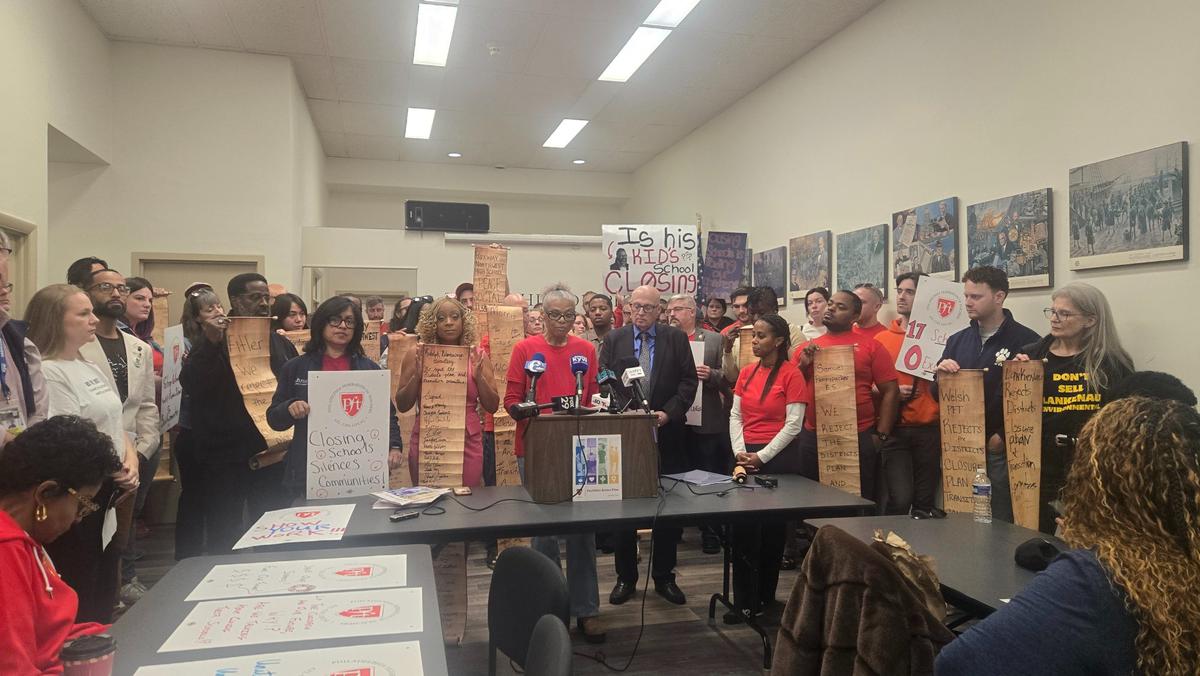
PFT member Claire Andrews of Wagner Middle School asks Mayor Cherelle Parker to direct the Board of Education to stop the planned closure of 17 schools.
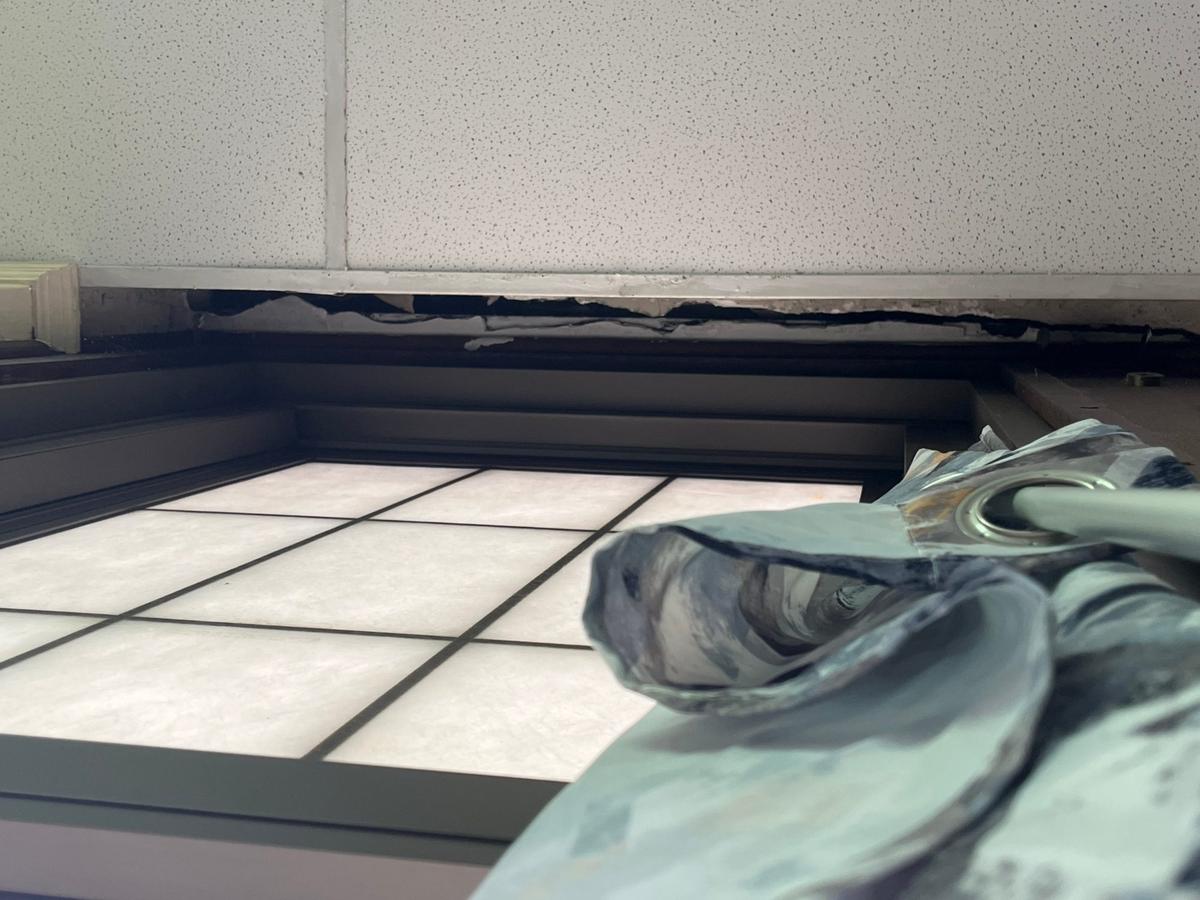
A cracked ceiling at Harding.
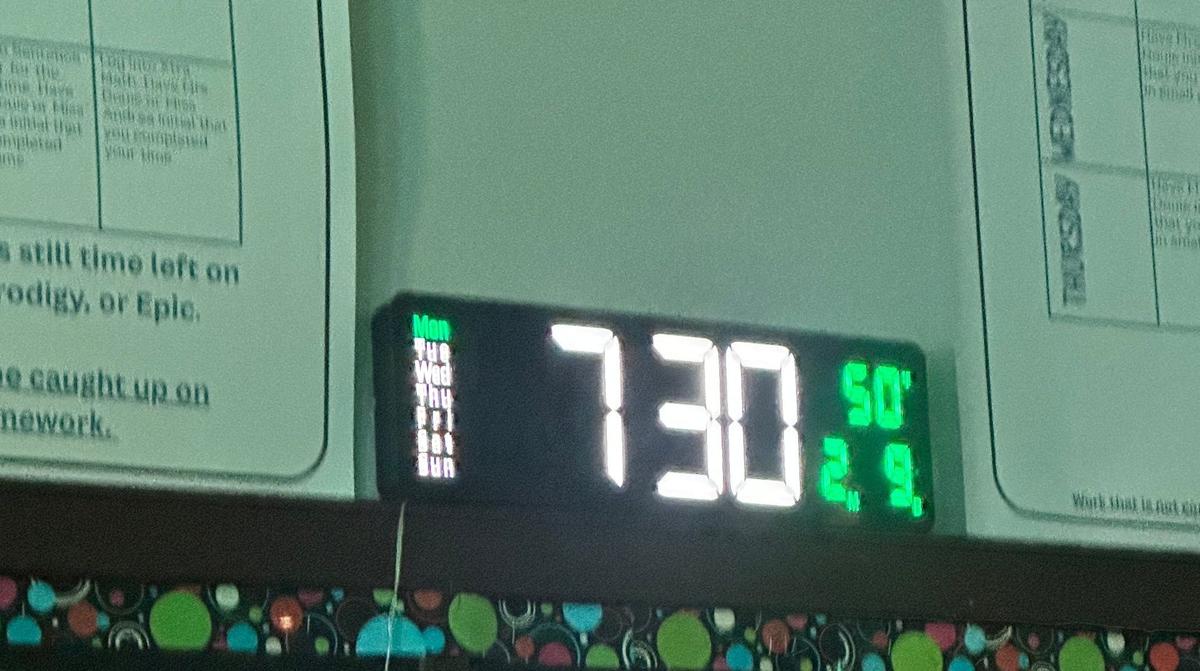
A 50 degrees temperature reading in a classroom at Penn Treaty.
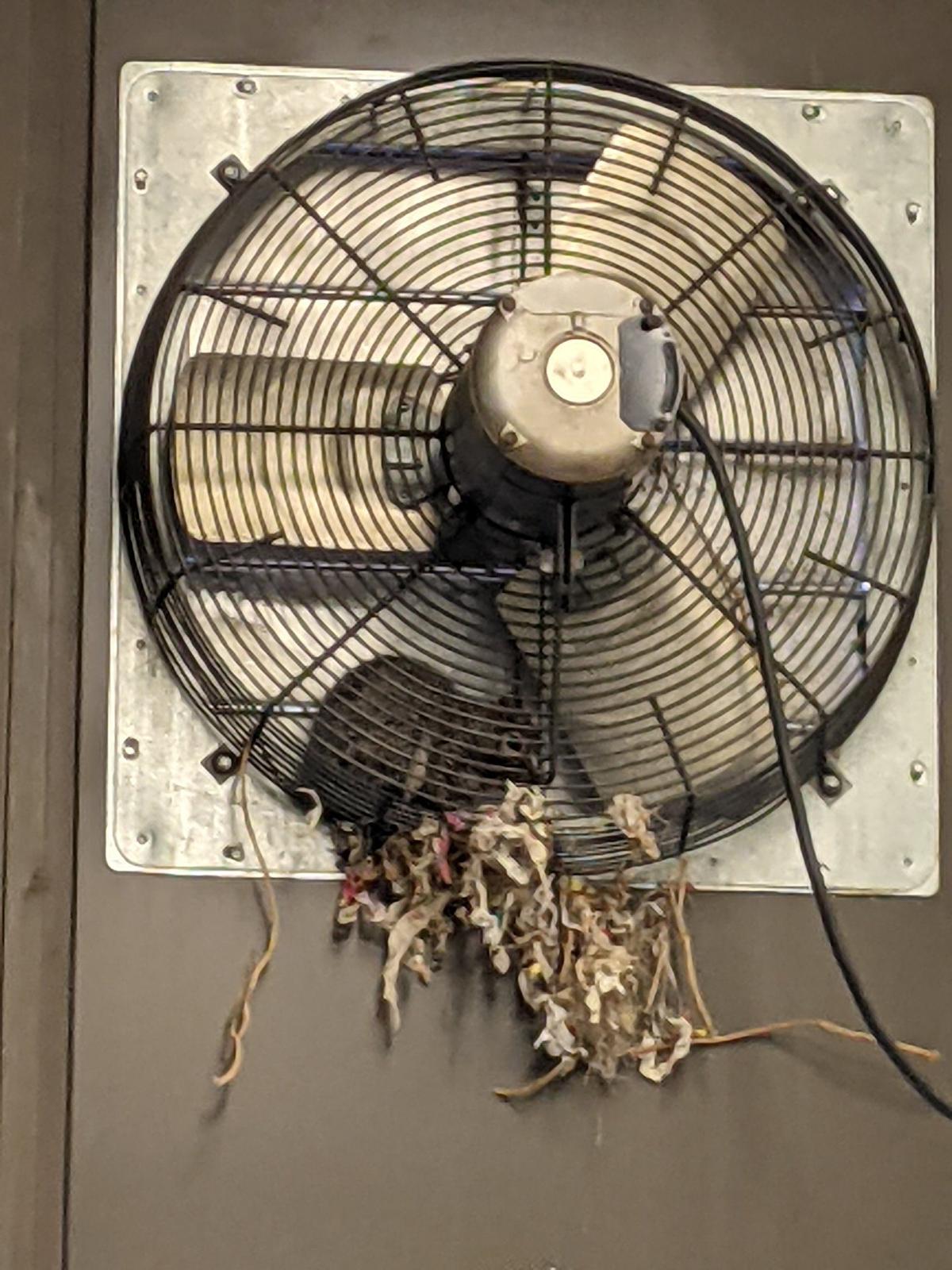
A rodent nest in a lab fan at Parkway West.
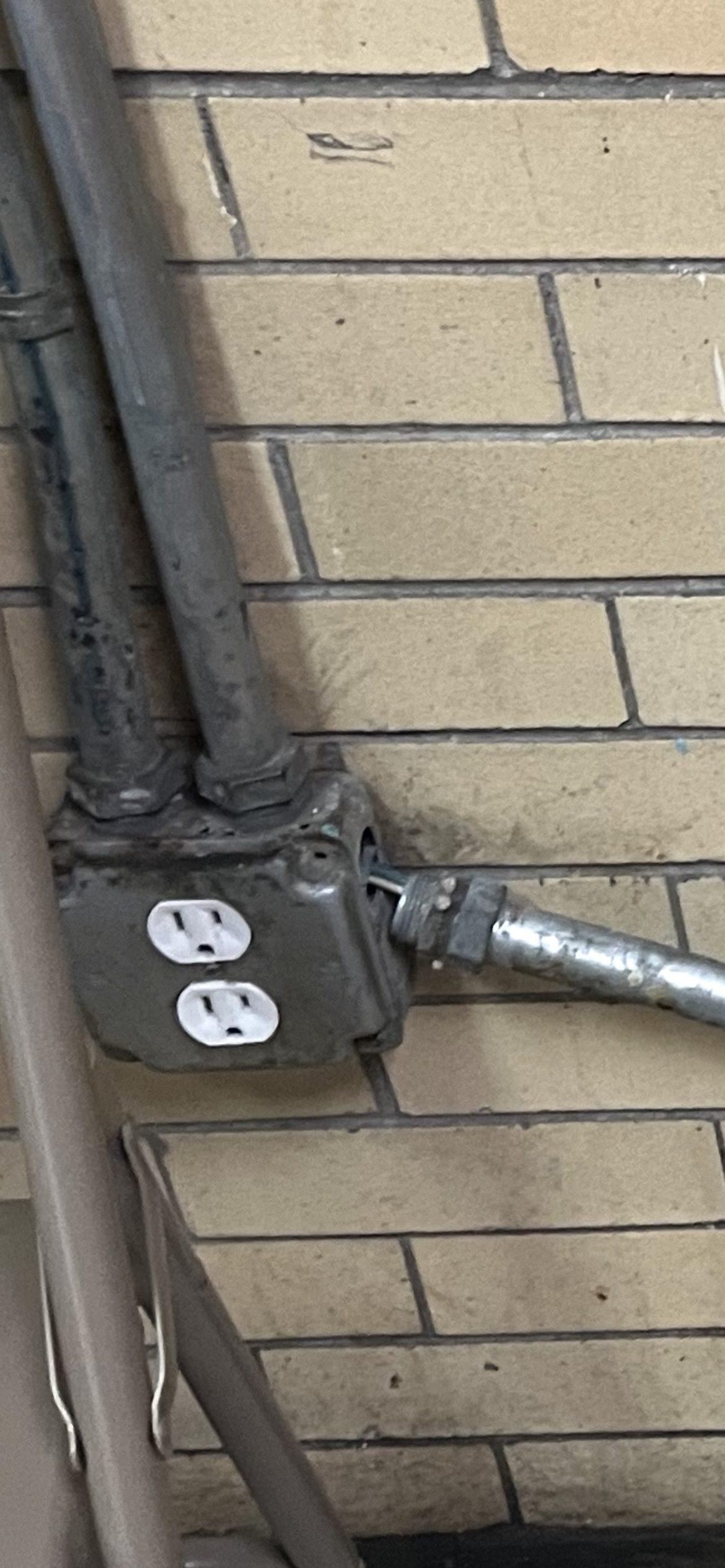
A detached outlet and potential electrical hazard in the cafeteria at Harding.